Archeological Site of Ancient Lousoi
The Lousoi was an important city of Arcadian Azania (such was the name on the Kleitora northwestern Arcadia), a holy nation-wide, the temple of Artemis Daily. Located on the southwest side of the extension of Aroania mountains (Helmos) and specifically in the western foothills of Lucius terms or Prophet Elias in the Soudena valley between Kynetha and Kleitoros.
Tradition connects the sanctuary of Artemis with the seer Melampus (The Chief Psychiatrist of antiquity) that there cured by madness, by goddess intervention, the daughters of the king of Tiryns Proetos great-granddaughter of Danaos.
As gratitude to the view, the daughters introduced female dances, established a sacred grove where erected altar which blood erainan from goats and sheep. Since then, the residents named Artemis Daily, Day, one that imerefei everything. In honor of the goddess was a great celebration, the DAY, with races which took place and foreigners. Artemis was then "day" (good-natured, benevolent) with offerings and rituals in the sanctuary.
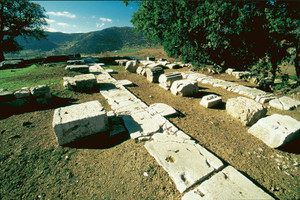
Lucy near the village of Kalavryta Municipality, the Austrian Archaeological Institute has brought to light the great Arcadian town Lousoi while excavations continue. the Temple of Artemis Daily excavated, built in the 3rd century BC century, the city market and many private residences.
In 1886 the first C. Papandreou has detected the actual position of the church and the city. In 1898 and 1899, with permission of the Greek Government W. Reichel and A. Wilhelm excavating the hill sacred. The excavation revealed the foundation of the church and the main buildings of the sanctuary, not confined to the sanctuary and did not include city, which is at a lower level. The excavation of the sanctuary continued in 1981 under the supervision of the Director of the Austrian Archaeological Institute Veronica Mitsopoulou-Leon and since 2000 under the supervision of the new Director, Georg Ladstätter. Launched additional excavations in the foundations of the temple of Artemis in order to confirm the chronology, and Georg Ladstatter prepared a new draft of the temple plan. In addition, east of the Temple of Artemis, brought to light the depositor with a significant number of offerings, dating to the Late Geometric and Archaic period, oblong building, probably earlier temple of the great temple.
The ruins date from the late 4th century BC and early 3rd century. BC, where the sanctuary flourished. But sure and use an older church after finding a piece of marble statue of the goddess, dated the 6th century. B.C. Also found in the sacred silver and copper coins in the form of Demeter or Zeus Omagyriou and inscriptions.
The area surrounding the ancient city has been declared an archaeological site and the site of the temple is visited for the public.
Navigate via Google Maps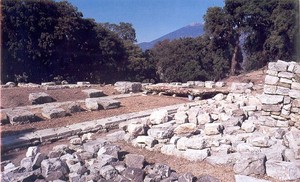

Ancient Kleitor